

Listen up, gadget nerds. While you’re debating whether that new RTX 5090 is worth selling a kidney for, Japan has been quietly building the ultimate budget build: a cardboard drone that flies, fights (sort of), and costs a measly $2,000. That’s right—cheaper than a high-end gaming PC, and it doesn’t even need RGB lighting to look cool.
Meet the AirKamuy 150 from AirKamuy, the Japanese startup that’s basically turning Amazon packaging into military tech. This bad boy is a fixed-wing drone made primarily from corrugated cardboard with a fancy water-resistant coating. Because nothing says “high-tech warfare” like the same material your last IKEA bookshelf came in.
Why Cardboard? Because Reasons (And Savings)
In a world where military drones usually cost more than a small house, Japan said, “Nah, let’s go full recycle mode.” These things ship flat-packed, assemble in 5-10 minutes (no Allen key required, thankfully), and you can cram about 500 into a standard shipping container. Logistics win!
- Range: About 50 miles
- Flight time: Up to 80 minutes
- Payload: Up to 3 pounds (perfect for a tiny camera, some snacks, or… light explosives? We’re not asking questions)
- Power: Electric propulsion (eco-friendly death from above?)
They’re already being used by Japan’s Maritime Self-Defense Force as aerial targets and for swarm practice. Imagine hundreds of these buzzing around like angry Amazon delivery drones on a Black Friday. Enemy radar operators are going to need therapy.
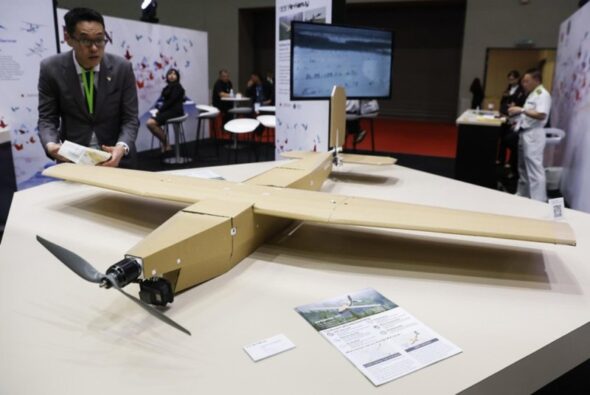
The Humor Writes Itself
Picture this: A multimillion-dollar fighter jet gets taken down by what is essentially a fancy paper airplane with a motor. The pilot ejects, looks up, and sees… corrugated cardboard. The ultimate plot twist. Or your average gamer: “Bro, my cardboard drone swarm just overwhelmed their air defenses while my PC is still rendering the menu screen.” Japan, the land of origami and bullet trains, looked at drone warfare and thought, “What if we made it… foldable?” From the inventors of sushi and PlayStation comes the ultimate consumable gadget. One-use only, like those overpriced face masks from 2020, but with better range.
Why This Matters for Us Gadget Lovers
This isn’t just military tech—it’s a masterclass in disruptive engineering. Why spend aerospace composites when cardboard factories can pump these out like pizza boxes? The real brains are in the autonomy and swarm software, not the airframe. It’s like how your phone isn’t impressive because of the glass—it’s the silicon inside. Future implications?
- Swarm parties: Hundreds of cheap drones overwhelming expensive systems.
- DIY potential: Flat-pack drone kits for your next backyard BBQ (just don’t tell the FAA).
- Cost comparison: For the price of one fancy military drone, you could buy a fleet that blots out the sun. Take that, defense contractors!
If this thing gets even smarter, we might see “Cardboard Drone Pro Max” with better cameras and a subscription for extra lives. Until then, respect to AirKamuy for proving that sometimes the best gadgets come from thinking outside the (cardboard) box.
What do you think—would you trust a cardboard drone to deliver your next gadget haul, or are we all doomed to a future of paper plane warfare?
Stay gadgety, folks.