
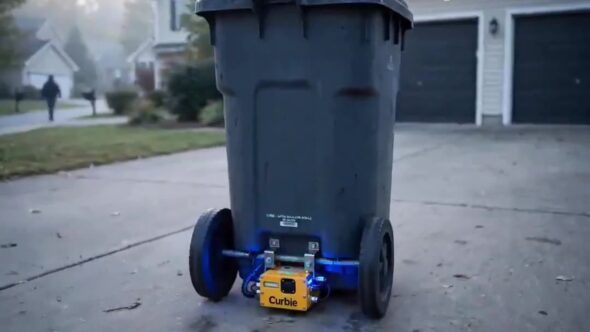
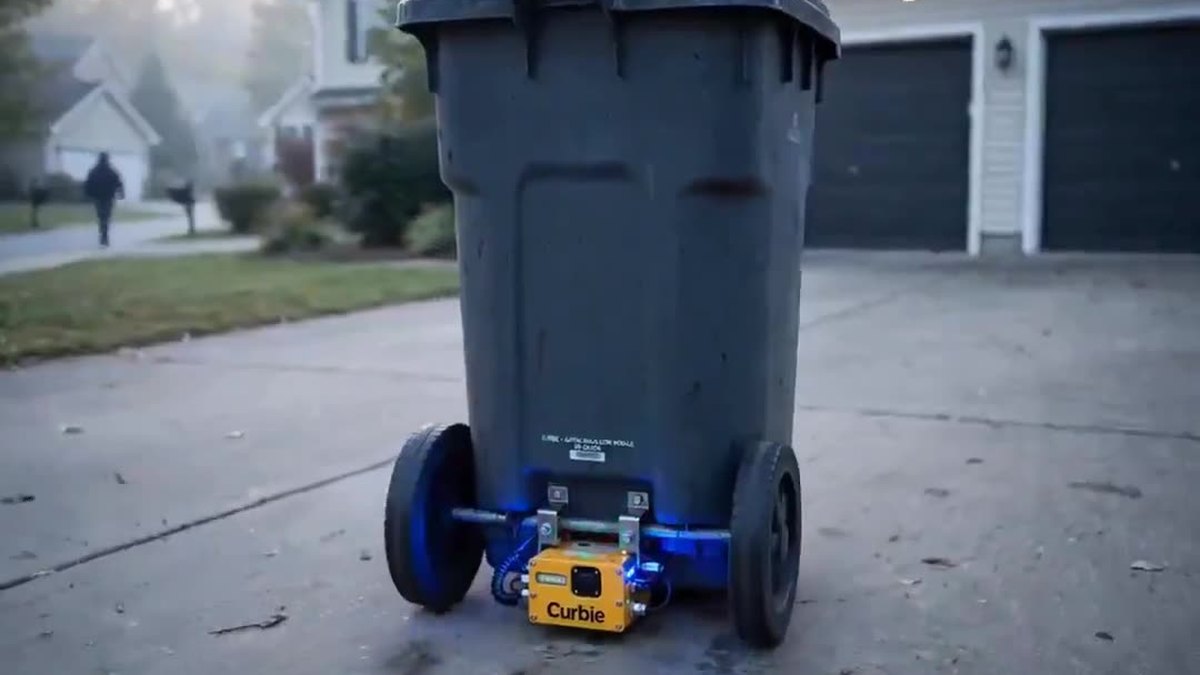
Somewhere right now, a person in pajama pants and a winter coat is dragging a 100-pound trash bin down an icy driveway at 6 AM, muttering. Boston startup Revere Robotics wants to fire that person from the job. Its robot is called Curbie, and it has one mission in life: take your bin to the curb, wait for the truck, and bring it back. A 10-second clip of it shared on X by Praveen Kumar Verma on Nov. 4 racked up tens of thousands of views in a few hours, because apparently everyone hates this chore.
Why are we still dragging 100-pound trash bins through freezing rain, snow and 6 AM dark like it’s the 19th century? Meet Curbie, an autonomous robot built by Revere Robotics that is finally killing off this miserable weekly chore.
– Praveen Kumar Verma (@Alacritic_Super) November 4, 2026
How Curbie works
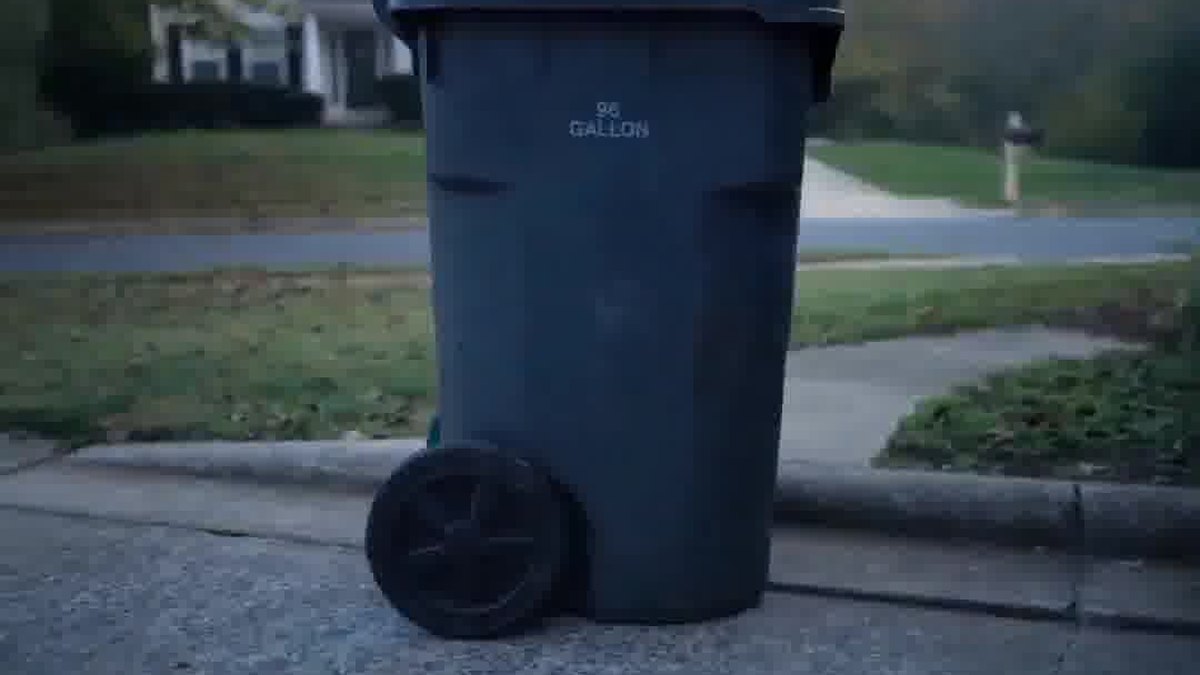
The clever bit is that Curbie does not ask you to buy a fancy new bin. According to Revere Robotics, the robot couples directly to the steel axle of the municipal bin you already have. No proprietary cans, no new curbside hardware, no begging the city for anything. On collection day it latches on, drives the bin down to the curb, and later brings it home after pickup.
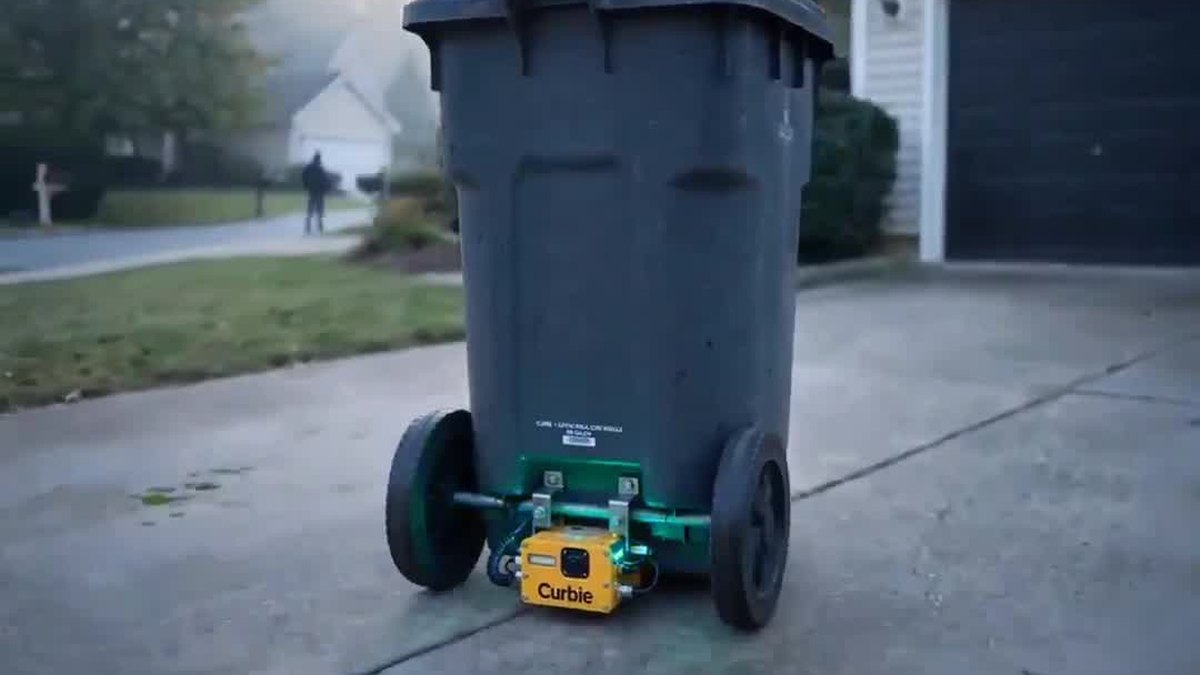
Think of it as a tiny, very dedicated tow truck that lives under your garbage can. In the clip it looks like a low-slung chassis with chunky wheels, tucked between the bin’s own wheels so the whole thing rolls along like the bin grew a motor. Revere says the team is focused on brushless motor torque, latching hardware and “fail-safe autonomy,” which is engineer-speak for “please do not let the trash can roll into traffic.”
The honest part
Here is where we tap the brakes. Curbie is not something you can buy yet. Revere describes it on its official site as an autonomous residential cart platform that is “currently in active development,” and it is collecting sign-ups for a field-trial waitlist. There is no price, no ship date and no Kickstarter. The company also notes that the visuals it has shared are concept renders of the prototype, not final product footage. So the slick video is a preview of the idea, not proof that a finished robot is out there conquering cul-de-sacs.
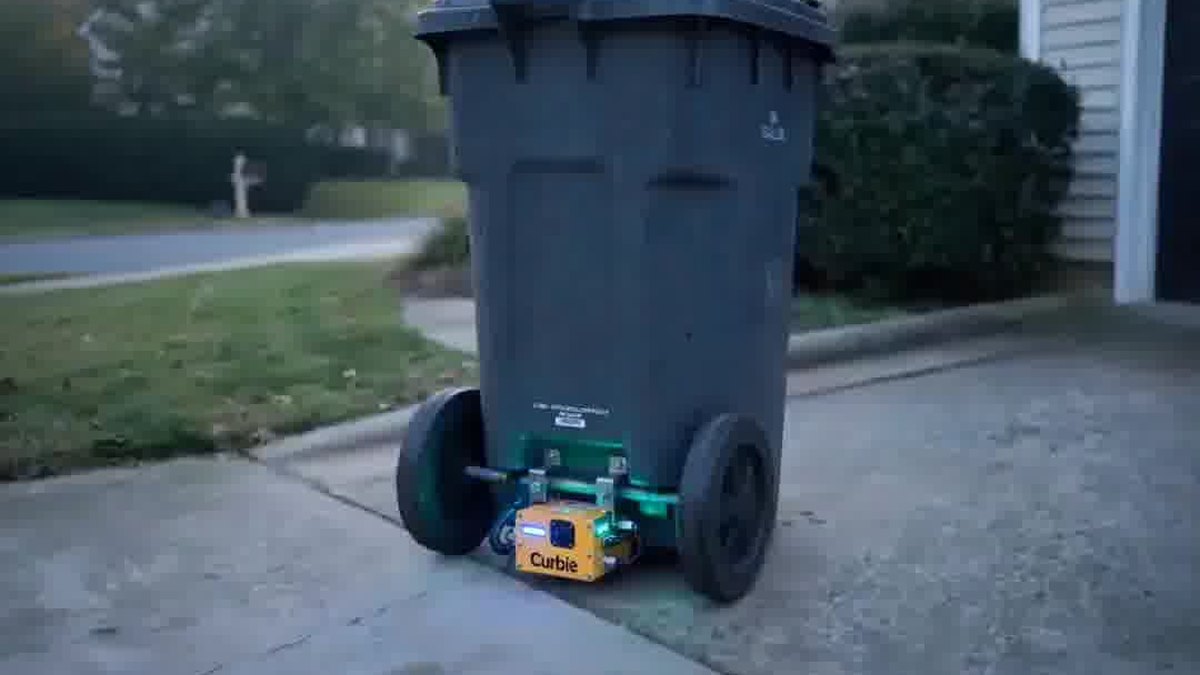
To its credit, Revere has been refreshingly upfront about the hard parts. In a follow-up post, the team answered the top questions from commenters. Tipping? A loaded bin is top-heavy, so the robot is being designed with a low center of gravity, and if it senses tilt it does not understand, it stops and alerts the homeowner. Charging outdoors in snow and ice? The team calls that “still an open problem.” Grabbing bins from different makers, with worn wheels and bent axles? That is the coupling challenge they say they think about most.
Plenty of questions remain open, too. Revere has not published specs for battery life, steep driveways, gravel, deep snow, or how Curbie finds the curb and dodges the neighbor’s kid on a bike. Until a real prototype hits a real driveway, treat those as unknowns.
GadgetKing take
We love this kind of robot. Not a humanoid doing backflips, just a small machine aimed squarely at a chore everyone hates. Older folks, people with bad backs, and anyone with a long driveway would be lining up. The catch is that the hard parts, weather, charging and grabbing a beat-up bin every single week, are exactly the parts nobody has shown yet. If Revere cracks them at a sane price, the trash bin walk of shame could be history. If you want in early, the waitlist is at revererobotics.com.
Sources: Praveen Kumar Verma on X, Revere Robotics and Revere Robotics on LinkedIn (1, 2). Images: video stills from the @Alacritic_Super X post showing Revere Robotics concept visuals.
More robots that do the boring stuff: the Voxel robot butler, the robot that re-parks badly parked cars and China’s four-drum washing machines.
