
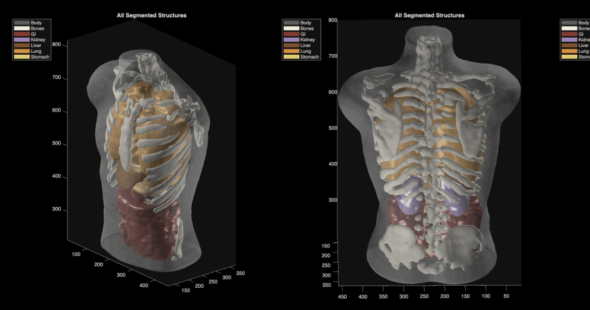
Midjourney, the company famous for its AI image generator, has just unveiled its first major hardware product: the Midjourney Scanner (also called Ultrasonic CT or full-body ultrasound CT). This isn’t science fiction—it’s a real prototype that uses sound waves and water to create detailed 3D maps of your body in under a minute, with no radiation and no powerful magnets.If you’re searching for the future of personal health gadgets, preventive wellness tech, or radiation-free full-body scans, this is the breakthrough everyone’s talking about.
What Is the Midjourney Scanner?
The Midjourney Scanner is a full-body imaging device developed by Midjourney Medical, a new division of the AI company. It delivers high-resolution 3D reconstructions of muscles, fat, bones, organs, and more than 25 anatomical structures—aiming for image quality comparable to (or better than) MRI in key areas like muscle detail and tissue boundaries.Key highlights:
- Scan time: ~60 seconds
- No radiation (unlike CT scans)
- No magnetic fields (unlike MRI)
- Uses only sound waves (ultrasound) and water immersion
- Sub-millimeter resolution in early demos
The goal? Make advanced full-body imaging affordable and accessible to billions—potentially for regular preventive check-ups rather than just when you’re sick.
 ‘
‘How Does the Midjourney Scanner Work?
The experience feels more like a spa treatment than a medical procedure:
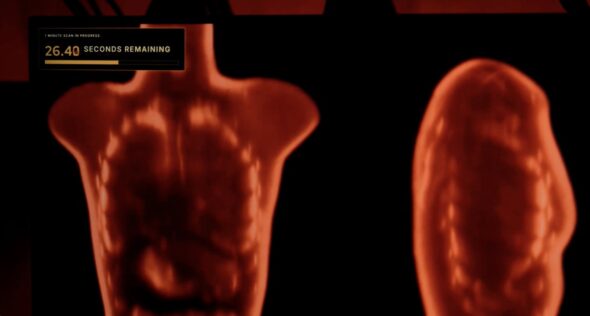
- You step onto a platform in a shallow pool of warm, golden-lit water.
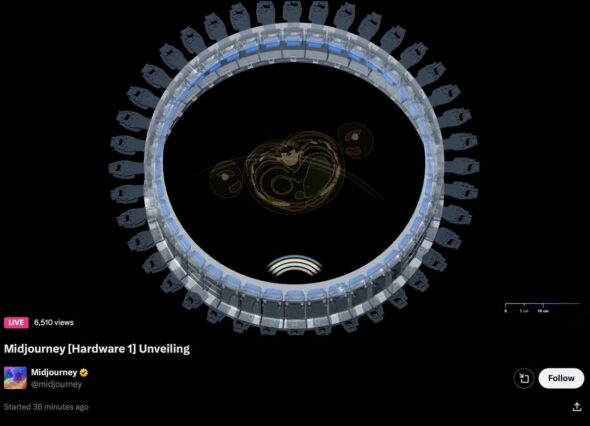
- The platform slowly lowers you (about 2 inches / 5 cm per second) through a large ring packed with roughly 500,000 tiny ultrasound transducers.
- These sensors act like millions of tiny dolphins using echolocation—sending ultrasonic waves through your body from every angle.
- The waves change as they pass through different tissues (skin ? fat ? muscle ? bone), and the system records the returning “ripples” at millions of times per second.
- Massive compute power (thousands of servers delivering ~2 petaflops) processes terabytes of data in real time.
- AI reconstructs the data into clean 3D volumes and segmented views (labeling organs and structures automatically).
The result? Stunning cross-sectional and 3D body maps you can review immediately.
Midjourney Scanner vs Traditional Imaging
|
Feature
|
Midjourney Scanner (Ultrasonic CT)
|
Traditional CT
|
MRI
|
|---|---|---|---|
|
Scan Time
|
~60 seconds
|
Minutes
|
15–60+ minutes
|
|
Radiation
|
None
|
Yes
|
None
|
|
Magnets
|
None
|
None
|
Strong
|
|
Cost Potential
|
Much lower (spa model)
|
High
|
Very high
|
|
Frequency
|
Potentially daily/weekly
|
Rarely
|
Limited
|
|
Full Body
|
Yes
|
Yes
|
Yes (but slow)
|
It partners with Butterfly Network, using their Ultrasound-on-Chip technology (40 modules per scanner ring).
The Midjourney Spa Experience
This isn’t just a medical device—it’s designed as part of a luxury wellness experience. Midjourney plans to open Midjourney Spas starting with a flagship location in San Francisco (Union Square area) by the end of 2027.The spa will feature:
- 9–10 Midjourney Scanners
- Hot tubs, saunas, and cold plunges
- Gym facilities
- Cozy, relaxing environments where the scan feels like a natural part of your visit
As Midjourney founder David Holz put it: “It’s going to be so nice, you’d go even if there were no scanners.”
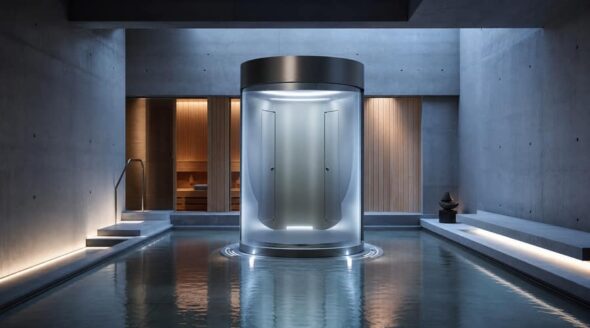
The vision: Turn full-body scanning into something you want to do regularly—like a monthly spa day—building a personal health timeline over time.
Timeline and Availability
- Now (June 2026): Prototype unveiled with live demos and scan gallery
- Next 12 months: Hardware and algorithm refinement, clinical research trials
- End of 2027: First Midjourney Spa opens in San Francisco
- 2028+: Scaling to more cities, next-gen scanners with custom silicon
- Long-term goal (by ~2031): 50,000+ scanners worldwide capable of a billion full-body scans per month
Midjourney is self-funding this through its successful AI image generation business (no outside investors for the core lab).
Why This Matters for Gadget and Health Tech Fans
The Midjourney Scanner represents a massive shift:
- From reactive medicine to proactive, data-driven wellness
- From expensive hospital visits to casual, spa-integrated experiences
- From rare, high-radiation scans to frequent, safe monitoring
Early feedback highlights its potential for tracking fitness progress, body composition, and catching issues early—though full FDA diagnostic approval will take time (initial use will focus on detailed body composition maps).
Final Thoughts
Midjourney has gone from generating surreal AI art to building real-world medical hardware. The Midjourney Scannercould be one of the most important consumer health gadgets of the next decade—fast, safe, and wrapped in an experience people will actually enjoy.
Would you get a full-body scan as part of your regular wellness routine? The future of personal health tracking might just involve stepping into warm water for 60 seconds.
Stay tuned—Midjourney is updating their site regularly with new scan examples and spa concepts. This is only the beginning.
