
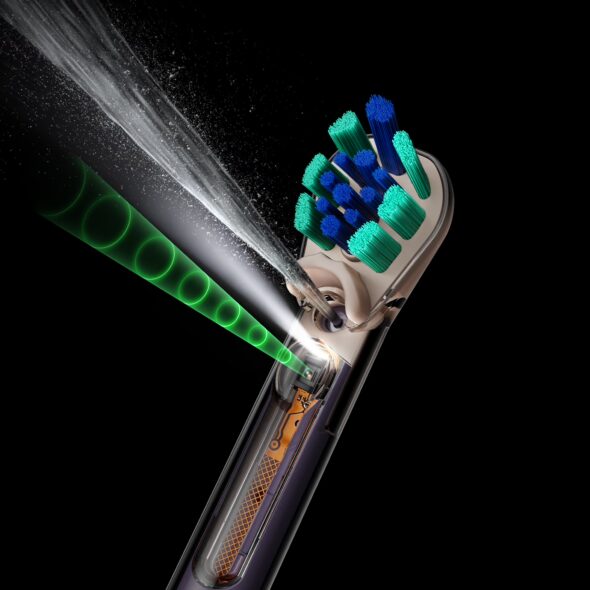
Dyson just put a camera and a water jet in a toothbrush. It costs $499. Of course it does.
Sir James Dyson spent six years, 661 engineers, 38 patents, and 16 million lines of code so you can livestream the inside of your mouth while a tiny AI-powered squirt gun flosses you. Welcome to 2026.
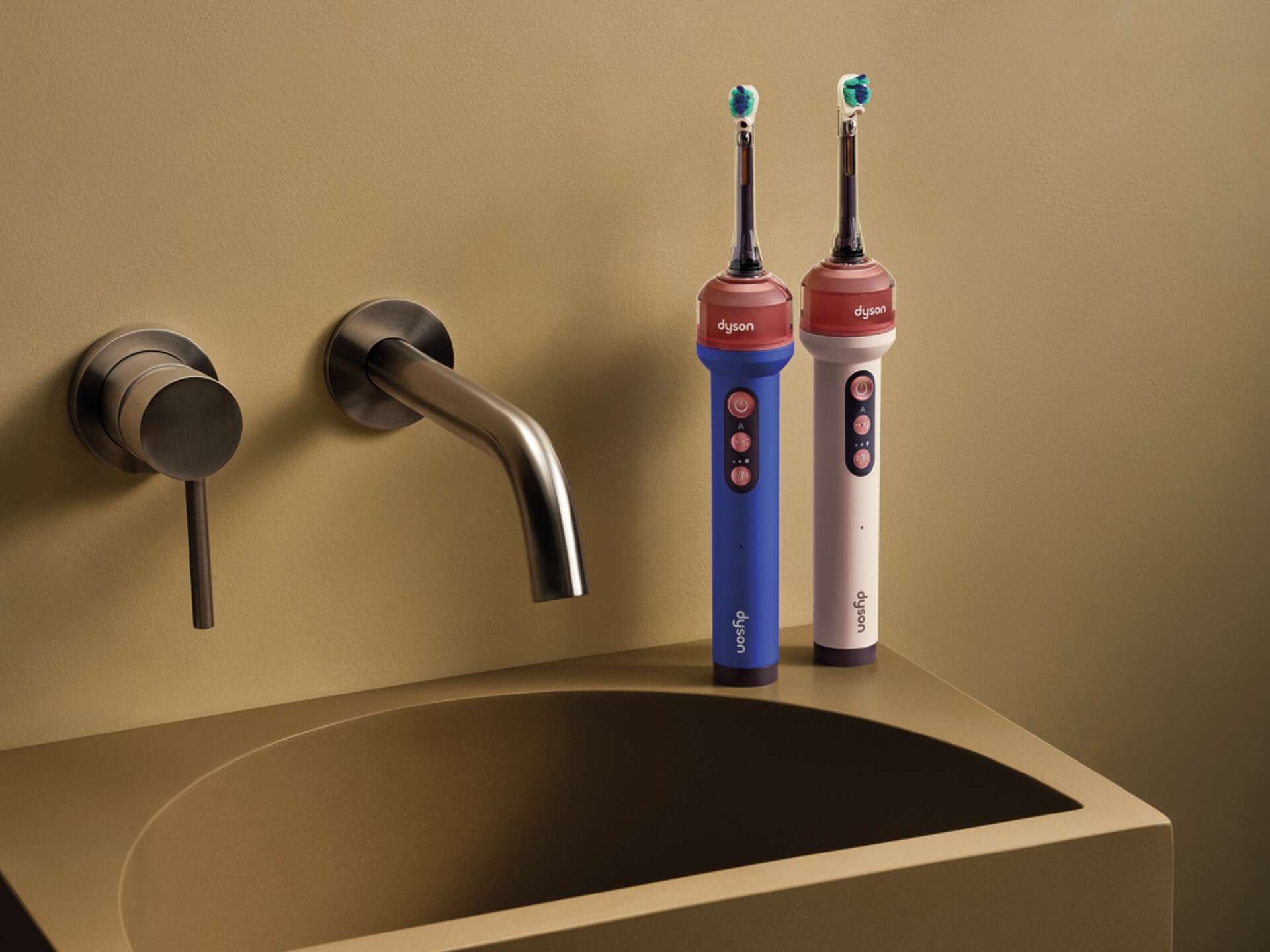
The Dyson CameraJet launched today. It is an electric toothbrush, a water flosser, and a 100,000-pixel intraoral camera stuffed into one very Dyson-shaped handle. As you brush, the camera analyzes 28 frames per second. When Gap Optical Targeting (yes, they trademarked that) spots a gap between your teeth, it fires a conical burst of mouthrinse within 100 milliseconds. You keep brushing. The device does the flossing.
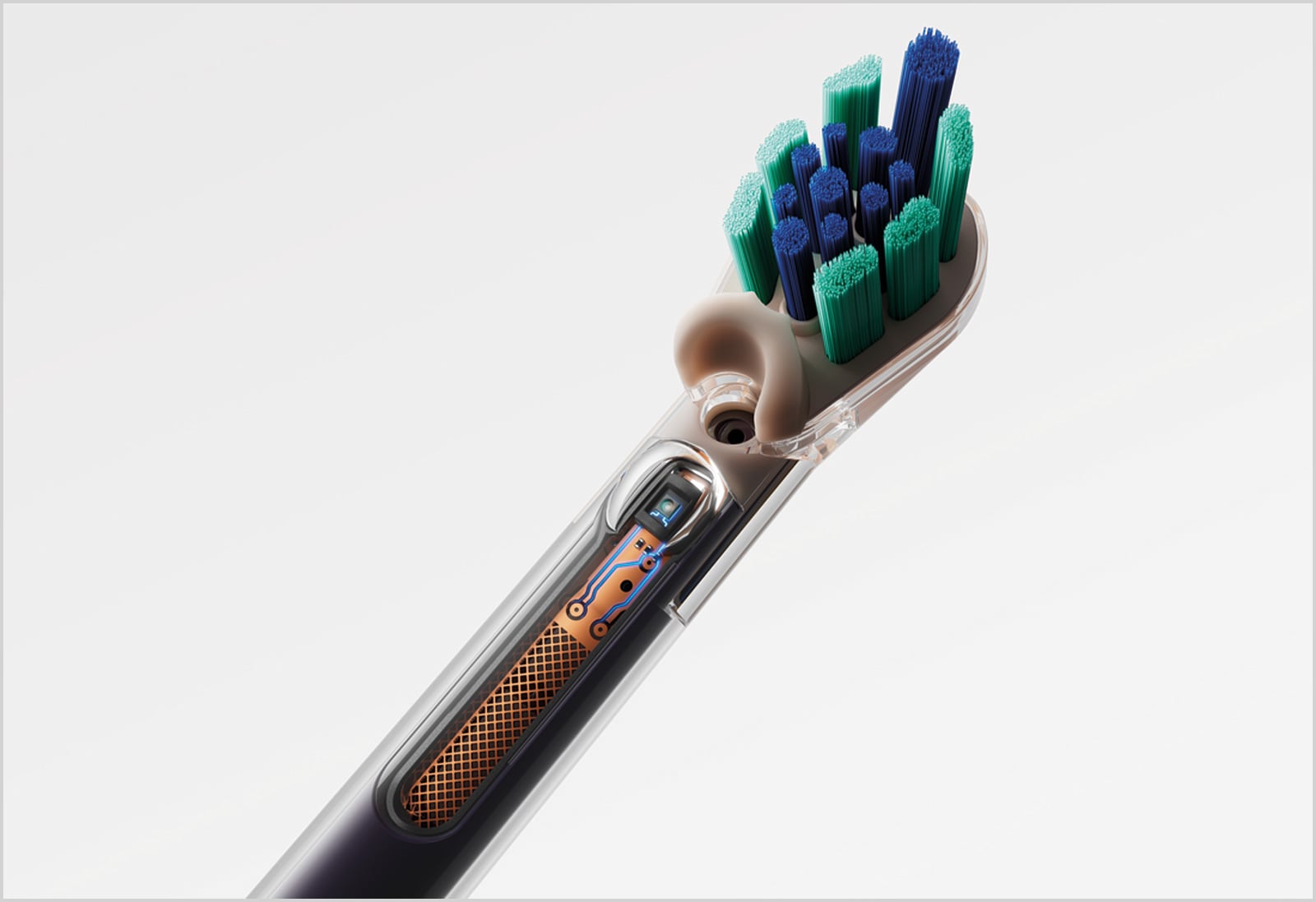
That is the pitch. And on paper it is the most Dyson product Dyson has made in years: over-engineered, slightly absurd, and aimed at a problem most people solve with a $.01 piece of string.
How the CameraJet actually works
The camera sits just below the dual-bristle head with a strobing LED. Dyson trained the model on 470,000 dental images. It does not store footage on the device or in the cloud; the camera only runs during live view or auto-jet mode. You can watch a live endoscope feed in the MyDyson app over Wi-Fi if you enjoy watching your own gums in high definition at 7 a.m.
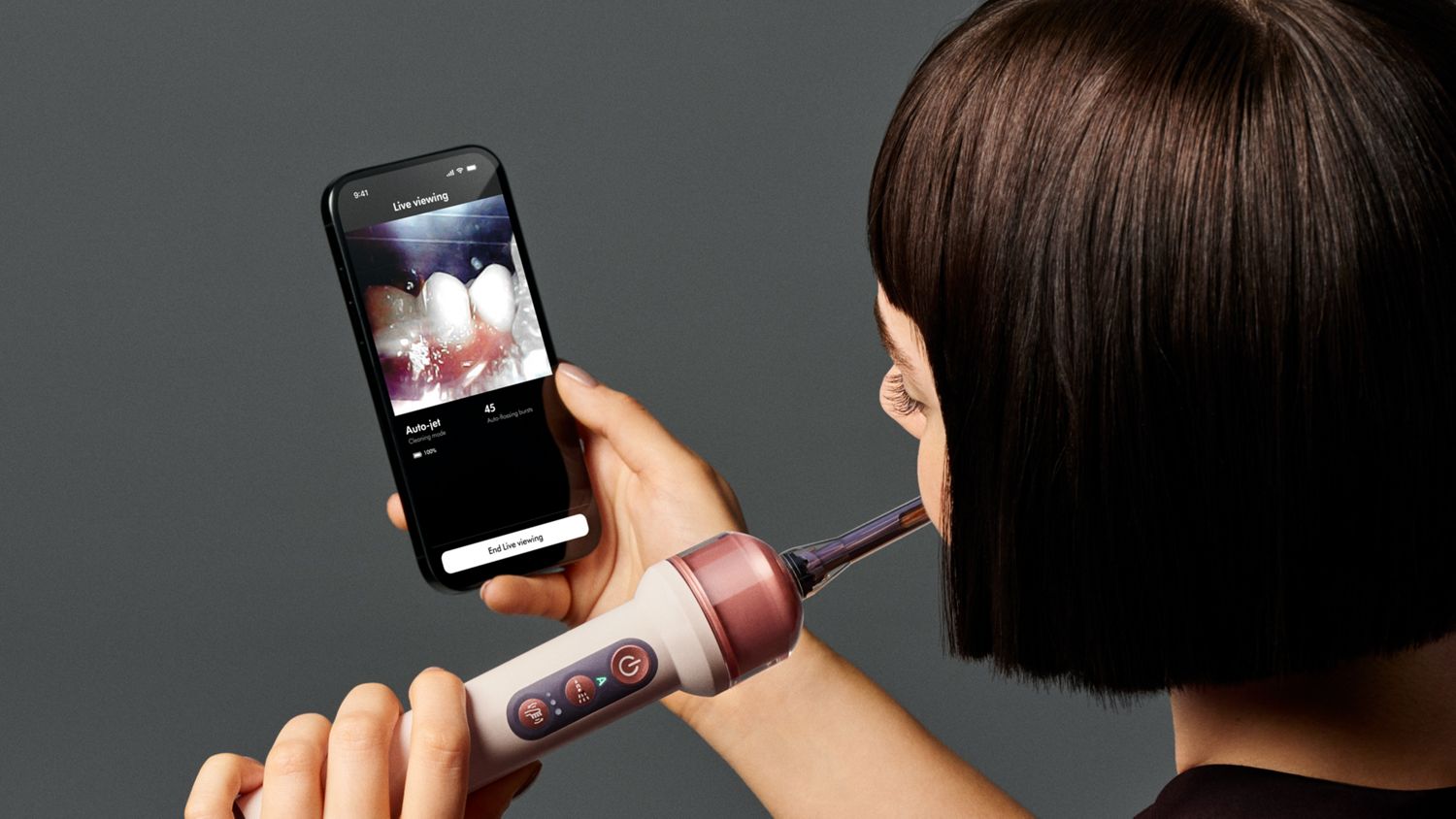
The jet is not a traditional water-flosser needle stream. Dyson went conical on purpose — wider coverage, lower perceived pressure, less “I just shot my gums with a pressure washer.” Each burst is tiny (up to 0.15 ml). The 12.5 ml tank is an “anti-gravity” bladder design so it still fires when you are upside-down attacking your back molars. Drop the handle on the dock and it refills in three seconds while it charges.

Other hardware notes:
- Variable sonic oscillation that changes angle so the bristles do not stall in tight spots. Dyson claims this removes up to 69% more plaque than market-leading premium electric brushes in hard-to-reach areas.
- Dual-hardness bristles: firmer in the middle, softer on the edges for the gumline.
- RFID-tagged heads that tell the handle (and the app) when they are worn out.
- Pressure sensor, three modes, ~10-day battery, 8-hour charge.
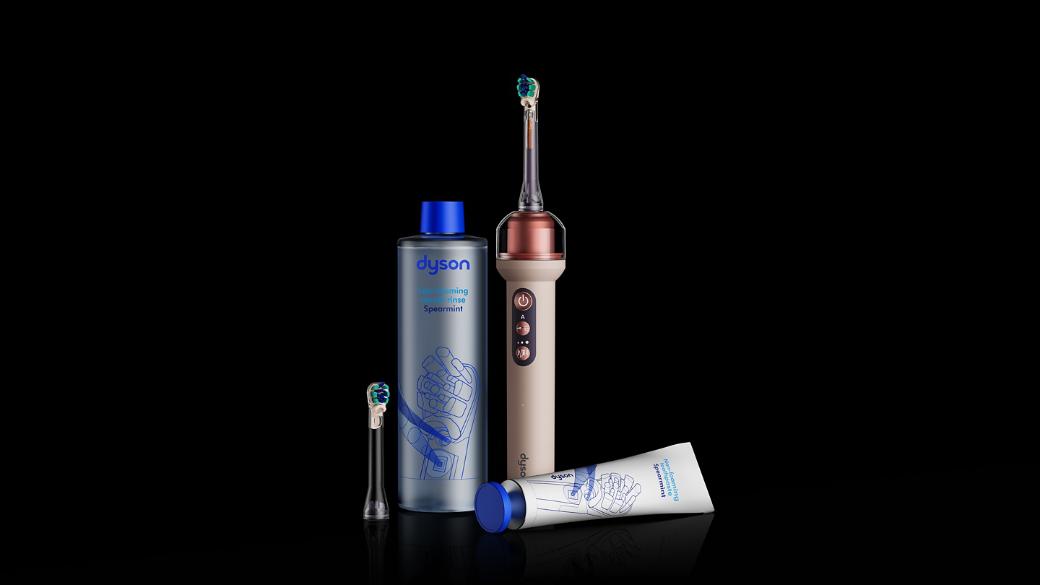
- Colors: Ceramic Ultra Blue and Ceramic Pink. The pink one looks like a high-end beauty tool. The blue one looks like it belongs next to a $700 vacuum.
Dyson also wants you on its consumables. Regular foamy toothpaste blinds the camera. They sell non-foaming toothpaste and low-foaming rinse. Replacement heads are about $25 for two. Hands-on testers who used it for a week estimate you could easily drop $150–$200 a year after the initial purchase if you stay in the ecosystem.
The ridiculous part, and the part that might actually work
I think this is a bit ridiculous. A half-grand toothbrush that requires special paste so its onboard camera can see is peak late-stage Dyson. The company that made bagless vacuums that actually worked better has spent the last few years shipping products that feel more like brand exercises than problem-solvers. Prices keep climbing. Build quality on some recent hair and floor tools has not kept pace with the marketing. The CameraJet sits right in that pattern: spectacular engineering applied to a category most people already handle adequately with a $80 Oral-B and some floss.

That said… people do not floss. Dentists have been screaming about interdental cleaning for decades and compliance is still terrible. If the CameraJet actually makes flossing automatic instead of optional, the health argument is real. Early testers who used it for a week reported calmer gums and visibly cleaner teeth. The live view is gimmicky until the first time you see plaque you have been missing for years. Then it is slightly horrifying and useful.
The downsides testers keep mentioning are the ones you would expect: it is bulky, the dock is a bathroom counter hog, smiling while you brush (which helps the camera) sends toothpaste everywhere, and there is a real learning curve. This is not a grab-and-go brush. It is a ritual.
Price vs. what you already own
$499 is Airwrap money. It is also in the same neighborhood as the most loaded Oral-B iO models that do not have a camera or a jet. Add a decent water flosser and you still come in cheaper, with less lock-in and no proprietary paste. Dyson’s bet is that combining the two jobs into one device — and making the second job automatic — is worth the premium and the subscription-adjacent consumables. I am skeptical. Their recent track record on “worth the premium” has been mixed.
Will it work out? Maybe for the people who already buy Dyson everything and hate flossing. For everyone else it looks like a very expensive answer to a habit problem. I will give Dyson this: nobody else was going to put a macro camera and an AI targeting system in a toothbrush first. They did the weird thing. That used to be the whole brand.
Whether the CameraJet is the next Airwrap or the next Dyson Zone headphones is the question. One of those became a cultural object. The other one quietly disappeared. A $499 toothbrush that films your molars is currently sitting right on that line.
