
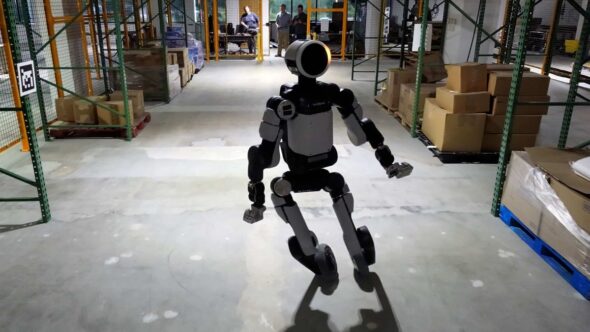
I judge 360s for a living. Not robot 360s, the human kind: hip-hop, the kind where you land on two feet and your crew tells you if it was clean. Boston Dynamics just bolted scooter rims onto Atlas, their humanoid robot, and the thing landed a 360 jump on the first try. I have notes.
Official, and not for sale
This is real, and it is official. On November 9, 2026, the Boston Dynamics YouTube channel posted “Atlas on a Roll | Classical Motor Controls and Whole-Body RL”, a 2-minute, 51-second lab video. The company also published a matching blog post by Xiaoyu (Andy) Wu, a controls engineer on the Atlas team. When I checked on November 10, the clip already had more than 560,000 views. The Verge and Interesting Engineering covered it the same day.
Wu’s first useful sentence is the one that matters: “A wheeled Atlas isn’t a product. It’s a research testbed.” Nobody is selling you a scooter-footed humanoid. The point was to push Atlas’s actuators, and the team’s models of those actuators, hard, then see whether a learned whole-body controller would still behave on the real hardware.
Boston Dynamics has done wheels before. In 2017 it showed Handle, a different research robot with wheels built in, work that later fed into Stretch. This is not Handle 2. This is the current Atlas with its feet pulled off and scooter rims bolted to the ankles.
The hardware is almost a joke, in a good way
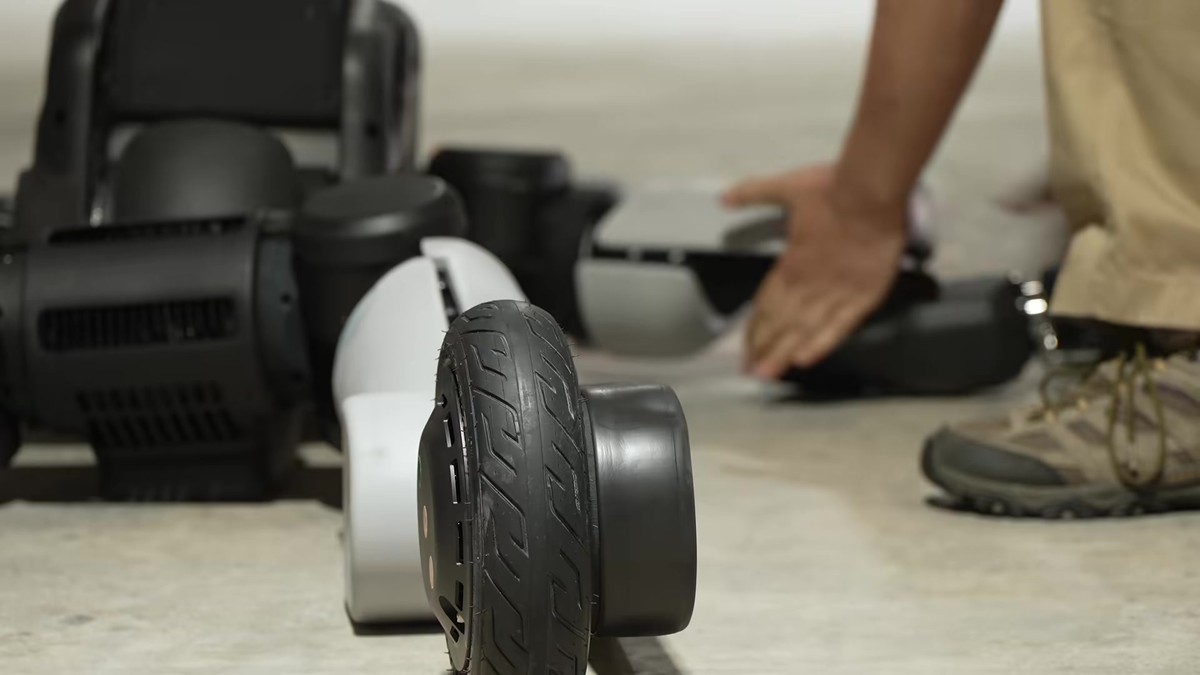
The conversion is almost insultingly simple. Wu says a single custom adapter mounts an off-the-shelf scooter rim onto the existing ankle actuator, and that adapter is the only new part in the whole build. Because Atlas was designed to be easy to service, he compares the retrofit to swapping a wheel on a bicycle. In the video, you can actually watch technicians do it on the lab floor.
The software change is in the same spirit. Each wheel is modeled as an “ankle” that can spin continuously. Wu says he took the baseline robot model, swapped the feet for wheels, and went from there. Some coverage has called them electric scooter wheels. The official write-up is more precise: they are off-the-shelf scooter rims, and Atlas’s own ankle motors are what drive them.
The 360, from a dancer’s seat
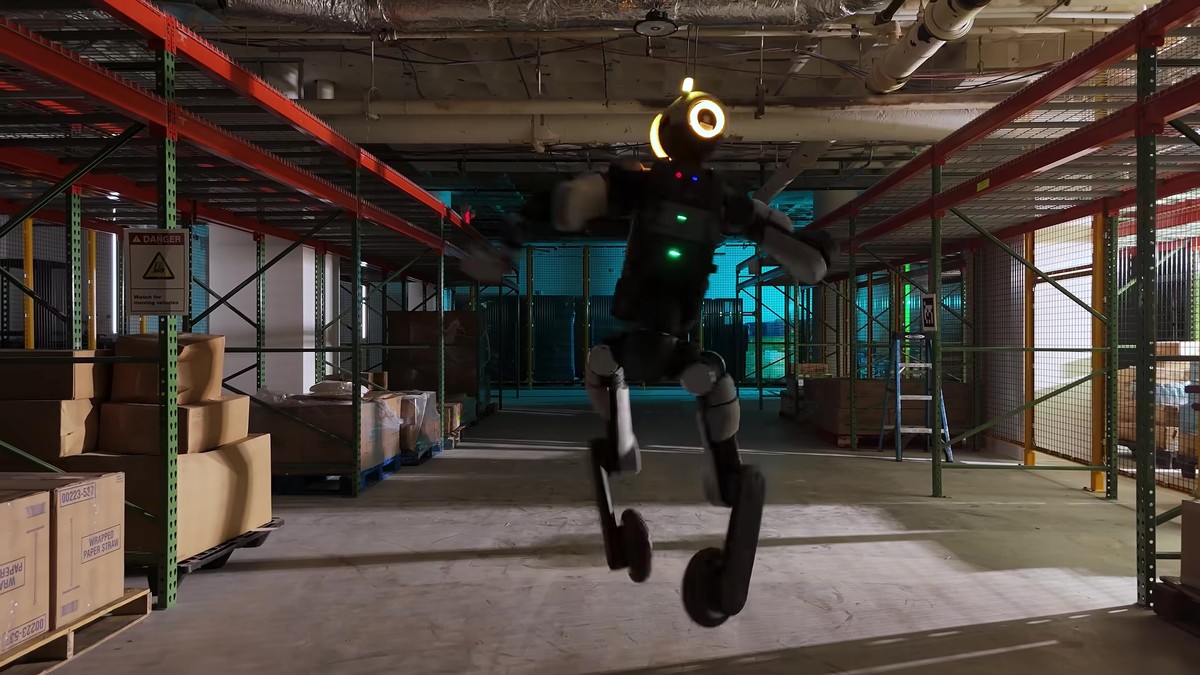
Here is the part that got the internet. Atlas winds up, leaves the floor, rotates a full 360, and lands on those little rims. Wu says the move came from a motion-capture recording of a person doing a jump 360. The team ran its trajectory-targeting training pipeline on that clip, and on the real robot, “it just worked first try.” He also says that despite looking energetic, the 360 was actually one of the lower-risk moves they did, because the controller is following a known human trajectory. During the windup, the wheeled lower body rolled into place before the upward push, a trick the footed version does not get to use.
My notes, since that is why I got this assignment. The rotation looks clean. The arms go out, the chest stays quiet, and the landing is surprisingly tidy for a machine that just traded its feet for scooter tires. I would still deduct a little style. A human 360 has a plie, a gathering, a reason the landing does not rattle your teeth. Atlas does not have that bounce. It has motors and a recorded path. Calling it low-risk after the robot already rolled across millions of simulated floors is also doing a lot of work. That is not a kid landing a driveway trick on the first try. That is a lab that already practiced in a computer until the real robot had no excuse. Fair. Still impressive. I am allowed to be both.
Side dashes, and why the wheels were even there
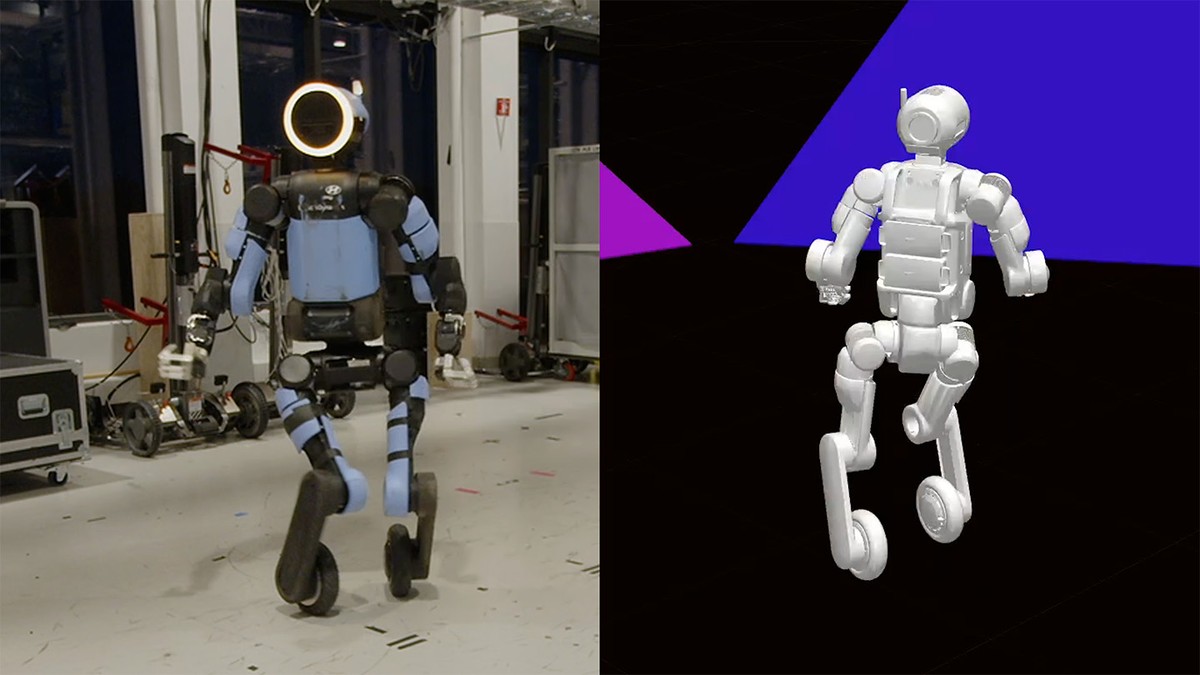
The 360 is the clip everyone will loop. The more interesting bit, if you like how robots actually learn, is the side dash. Wu looked through a library of human motion-capture clips for ones with a lot of foot sliding, because that is where wheels should get interesting. On feet, a side dash means you scrape or slide. Give the learned controller wheels, and it figures out how to steer and roll through the move instead. “Give the policy wheels, and it figures out how to use them,” he writes.
The wheels were not really the point, Wu says. The point was a test where the motors had to deliver high torque and high speed continuously, while carrying the robot’s real weight, through launches, turns and stops. Walking only asks for that in short bursts. Driving on rims asks for it the whole time. The unglamorous work was making the simulated motors behave like the real ones, so a policy trained in simulation would still work on the hardware. Boston Dynamics says those lessons are already being adapted back to the standard, footed Atlas. Wu’s next project is how the controller should respond when an actuator fails. That is a much less viral sentence, and probably the more important one.
It looks like a video game because, to them, it is
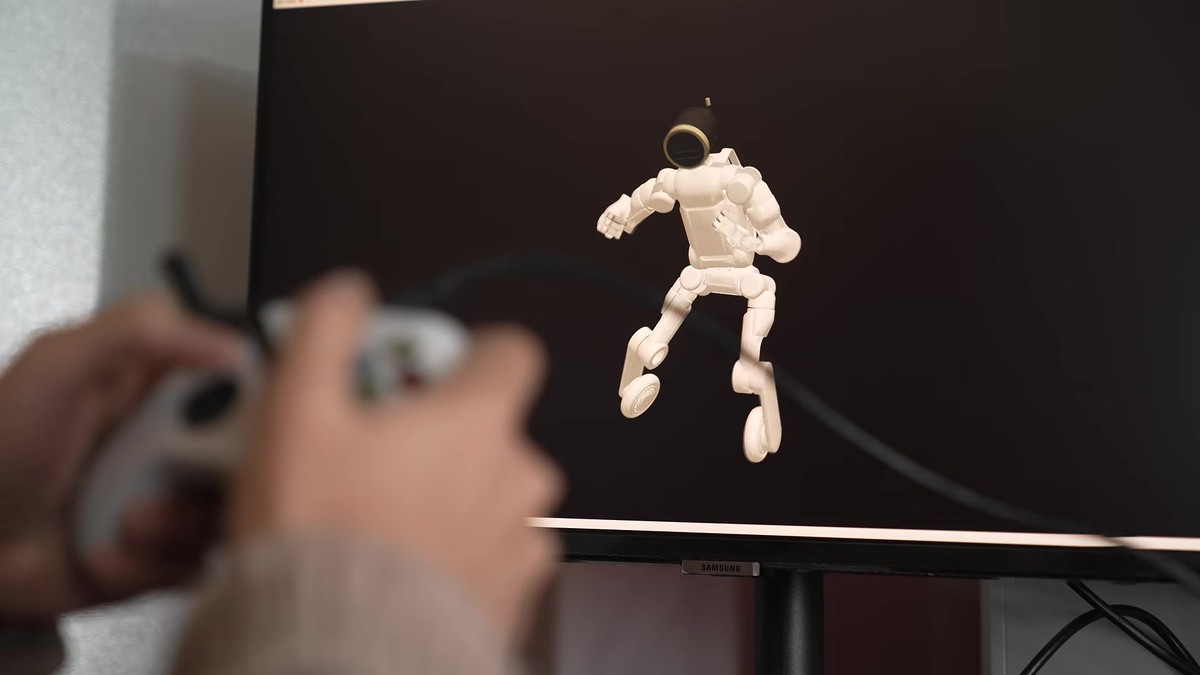
Wu compares driving the wheeled Atlas, drifting and sliding around, to playing a video game. He says he has not touched his gaming rig the whole time he has been working on this, because this is more fun. The official video even shows a game controller steering a simulated Atlas on a monitor. I play a lot of FPS games. I get it. I still want my 360 back.
There is no buy link, because there is nothing to buy. If you want the official version, start with Boston Dynamics’ Atlas On a Roll write-up and the YouTube video.
Sources: Boston Dynamics, “Atlas On a Roll” (official blog by Xiaoyu (Andy) Wu), “Atlas on a Roll” on the official Boston Dynamics YouTube channel (uploaded November 9, 2026), The Verge, Interesting Engineering and the official Handle video (2017). Images: Boston Dynamics official blog stills (01, 04) and stills from the official YouTube video (02, 03, 05).
More robots showing off: the original Boston Dynamics Atlas post, SpotMini, robot dogs racing up Mount Tai and the Unitree H2-X kung fu robot.
