
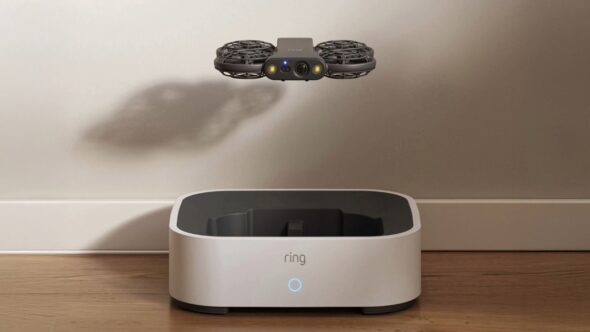
I like drones. I write about drones. I have flown enough of them to know when a demo is doing a lot of work. So when Amazon’s Ring finally showed a $249.99 indoor security drone that lifts off a dock and patrols your house, I wanted to be the guy who called it the future. Then I thought about actual houses.
A clip of the announcement has been making the rounds on X, including a tidy summary from Wall St Engine. The pitch is tidy. Houses are not.
AMAZON UNVEILS A FLYING HOME SECURITY DRONE
$AMZN introduced Ring Robotics with 2 autonomous security devices:
1) $250 flying camera for homes
2) $1,000 roaming robot for businesses.The Ring Drone Cam flies preset routes indoors, automatically investigates triggered alarms, and records 2K video. Its AI Pilot maps rooms and navigates around obstacles.
The Rover Cam autonomously patrols businesses, investigates disturbances, and records up to 4K video.
The drone is expected to ship Jan. 27, 2027, pending FCC approval, while the rover is scheduled for Dec. 16, 2026.
— Wall St Engine (@wallstengine) November 10, 2026
Ring announced the Drone Cam on November 10, 2026, as the flying half of a new Ring Robotics lineup. It costs $249.99. U.S. shipping is listed for January 27, 2027, but only after FCC authorization, and Ring is taking email sign-ups rather than orders. Sitting next to it is the Ring Rover Cam, a $999.99 rolling patrol robot for businesses that is up for preorder and scheduled to ship December 16, 2026. The official write-up is on About Amazon.
This is the long-delayed follow-up to the Ring Always Home Cam, which Ring first showed in 2020 and never put on general sale. Founder Jamie Siminoff has said the company has been chasing a drone concept since 2016, boxed units it never shipped because they “just didn’t work well enough,” and came close again in 2025 before starting over. The new version weighs 165 grams and puts most of the brains in the cloud.
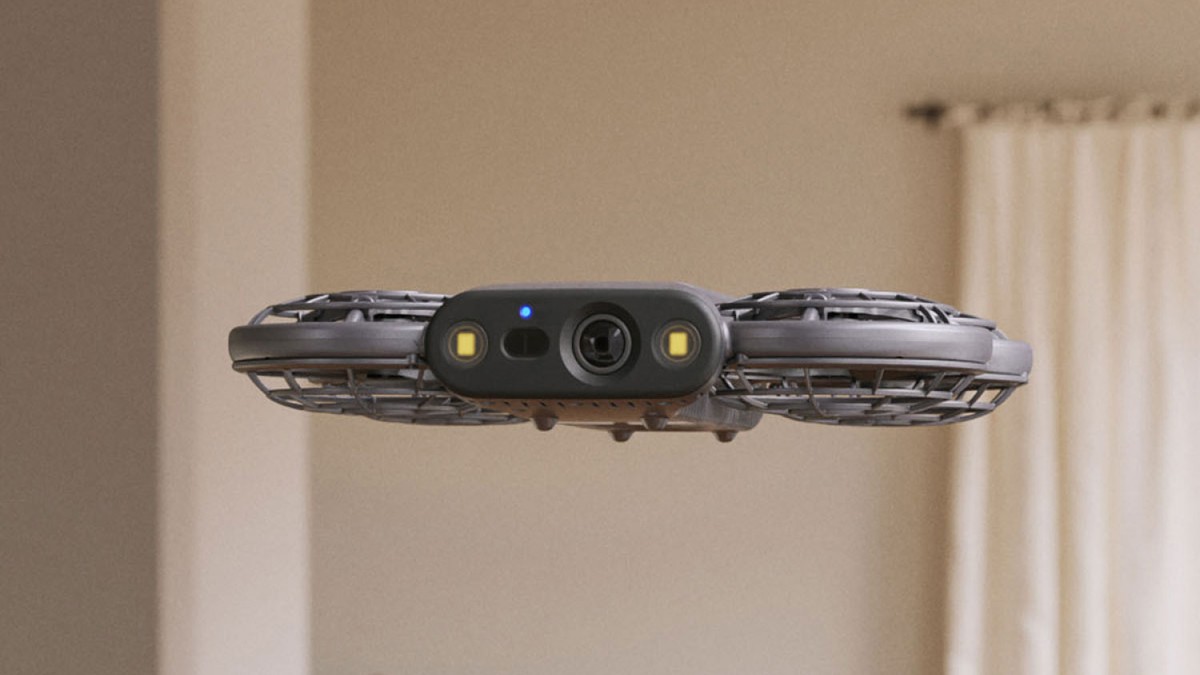
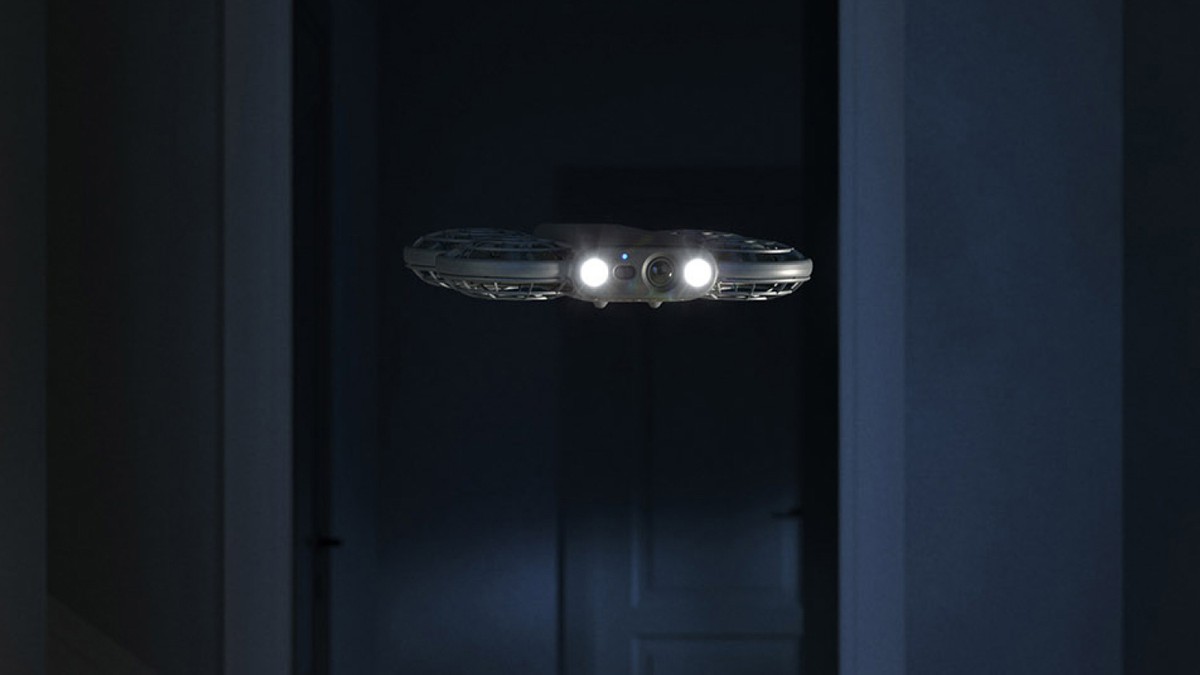
On paper, the idea is easy to like. You carry the drone through your house so a system Ring calls AI Pilot can build a floor plan and suggest patrol points. After that, you can send it to a saved viewpoint, run a scheduled patrol, or have it take off when another Ring camera, sensor, or alarm is triggered. Ring’s product page lists 2K video (1920×1920) and a 148-degree field of view. Engadget, at the launch, also described a 1080p camera on the underside, plus LED spotlights on the front and bottom. It uses those lights instead of infrared at night. Ring says it is indoor-only, records only while it is flying, and has no microphone, speaker, or siren. You cannot fly it like a toy quadcopter. You tap a spot, and the cloud-based AI Pilot tries to get it there.
That is a clever way to avoid mounting a camera in every room. It is also where the practical problems start stacking up.
Eight minutes, then a long nap
Ring’s FAQ says the Drone Cam can fly up to eight minutes, then it returns to the dock. At the launch event, reports stated Ring’s claim as five to eight minutes. I am sticking with Ring’s published “up to 8 minutes.” The charge math is less flexible. The consensus is eight minutes of charging buys one minute of flight, so a five-minute loop would cost about 40 minutes on the dock. This is a short check-in gadget, not a continuous guard. If a sensor trips while it is charging, Ring has not published how long you wait.
Your house has doors, stairs, and spinning things
Ring says the drone can fly upstairs, and CNBC repeats that it can go from room to room, including upstairs. The Verge noted that Ring did not demo the stairs. Tom’s Guide pointed out the obvious constraint I have not seen Ring advertise: if you want it in every room, you have to leave interior doors open before you leave. It cannot open a door. A closed bedroom door is the end of the tour.
Ceiling fans are an open question. Ring says AI Pilot navigates around furniture and obstacles, and The Verge reported the drone has no onboard sensors beyond what it needs to land, with the rest handled in the cloud. I have not seen a published test with a spinning ceiling fan. If it loses Wi-Fi, The Verge, Wired, and Engadget all report that it simply lands, which is why Tom’s Guide warns you not to route it over anything delicate.
Pets and kids belong in the same bucket. Tom’s Guide immediately thought of a dog that already hates the vacuum, and Wired asked what happens if a cat swats the drone down. A Ring spokesperson said you should not fly it if it is damaged and should contact support. Siminoff told Wired that if you stick a finger in the propellers, you will feel it, but “you’ll be fine.” That is not a child-safety manual, and Ring has not published one that I can find. The drone does run a motor health check before takeoff and will refuse to fly if it spots a problem.
Loud, slow, and easy to swat
Ring is honest about the noise. The official announcement says the propellers are not quiet on purpose, so the drone cannot sneak up on anyone. The Verge called it “noisy as heck.” Engadget said you would not want it flying for long if you like a peaceful house. Tom’s Guide heard a very loud, high-pitched whine and watched it rise to about 4 to 5 feet, then move at a “stately pace.”
That is a weak answer to a real alarm. Tom’s Guide noted that if the drone is docked on one side of the house and a window breaks on the other, the person could be gone before it arrives. It has no siren and no two-way talk, and it weighs 165 grams. If an intruder, or a cat, just knocks it down, Ring’s published guidance is basically: do not fly it damaged, and call support. The deterrence pitch is the noise and the moving lights, which Siminoff told CNBC might look like someone is in the house with a flashlight. That may startle a casual peek through a window. It is not a security guard. And because it can launch when a Ring sensor trips, a leak detector or a pet walking past a motion sensor can send a loud drone on a mission. Ring has not published a false-alarm rate for those automatic flights.
It needs Wi-Fi, a subscription, and a regulator’s permission
Almost all of the intelligence lives in the cloud. If the internet drops, the drone can land. It cannot keep patrolling. That is a strange failure mode for a security device: the moment your home network has a problem, the flying camera sits down.
Scheduled patrols require a compatible Ring Protect plan, and so do saved video history and video search. GeekWire noted that Ring did not say which plans qualify. Current Protect pricing starts at $4.99 a month, or $49.99 a year, for Solo on one device, and $9.99 a month, or $99.99 a year, for Multi at one location. I am not going to guess which tier unlocks the drone’s schedule.
You also cannot buy one today. Ring’s announcement is explicit: the Drone Cam has not been authorized under FCC rules and may not be offered for sale or lease until that authorization comes through. Siminoff told The Verge it is assembled in the United States and that the company is getting certification. Wired reported assembly in Texas, and because it is indoor-only and under 250 grams, it does not need FAA registration. CNBC quoted Siminoff saying customers are told not to fly it outside, and that Ring built guardrails to keep it from doing so. Until the FCC paperwork is done, the January 27, 2027 ship date is a target, not a checkout button.

Privacy, kept short
Ring says privacy is the default. The camera is covered in the dock, it only records in flight, and both this drone and the Rover use Ring’s new TAKE encryption. The Verge reported that keys rotate every five minutes and that Ring deletes its copies after 24 hours, while still using the cloud for alerts and AI video search. Wired made the important caveat: Ring still holds the key briefly to run those cloud features, so this is not true end-to-end encryption.
I am not going to relitigate a decade of Ring privacy fights here. The short, documented version is that Ring has a messy history with police video requests, including cases where footage was shared without a warrant, and that in January 2024 it ended the Neighbors-app tool that let police request videos from users and said it would require a warrant. A 2023 FTC settlement also covered employees accessing customer videos. Earlier this year, CNBC notes, Ring canceled a planned integration with Flock Safety after backlash. A cloud-piloted drone that maps your house will raise those questions again. The noise at least makes secret snooping inside the home a lot harder, which even Ring is using as a selling point.
The fair case, and the rolling cousin
I can still see who this is for. If you already live in the Ring app, you do not want cameras in every room, your layout is mostly open, you can leave interior doors open, and you want a quick look when a sensor trips, a $249.99 flying check-in camera is more interesting than a wall of indoor cams. The best fit is a simple, single-level home with calm pets, or no pets. A basement leak alert, which is the use Tom’s Guide could actually picture, is in that group too.
Everyone else is being asked to buy a loud, short-flight, cloud-dependent drone, pay for a subscription to use some of its best features, leave doors open, and hope the January ship date and the FCC line up. For a lot of houses, a couple of regular indoor cameras still sound less exciting and a lot more practical.
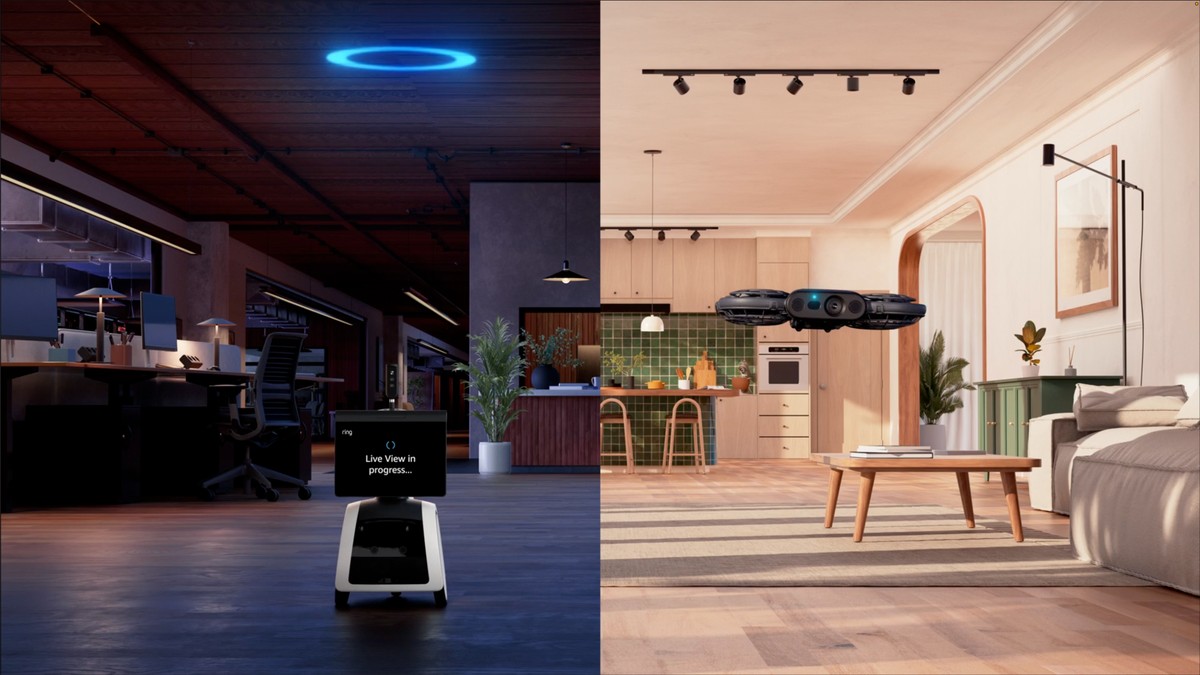
The Rover Cam is the more straightforward product, at least as a concept. It is a purpose-built security version of Amazon’s Astro, with a 4K periscope camera that Engadget says can extend up to 4 feet, a siren, two-way audio, a light tower, about 30 minutes of runtime, and coverage up to 5,000 square feet on a single floor. It costs $999.99, ships earlier, and is actually in preorder. Amazon has discontinued an Astro-for-business robot before, so I would go in with eyes open. At least that one does not need you to leave every door open and hope nobody owns a cat.
If Ring can make the Drone Cam reliable in a messy, multi-story house, I will be genuinely impressed. I fly drones for fun. I still would not want this one buzzing the hallway on a leak-sensor false alarm at 2 a.m.
Sources: About Amazon (official Ring Robotics announcement, prices, dates, FCC note, AI Pilot, privacy claims), Ring Drone Cam (specs, FAQ, email sign-up, subscription footnotes), Ring Rover Cam (business robot specs and preorder), The Verge, Engadget, Wired, CNBC, GeekWire, and Tom’s Guide (hands-on and launch reporting). Privacy background: Ars Technica and the EFF on the 2023 FTC settlement. Official product video: Ring on YouTube.
