
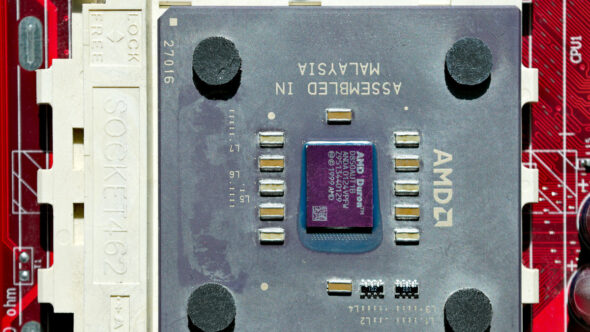
I have seen a lot of “hack your PC with a household item” clips. Most of them are junk. The pencil CPU hack in Dart Games’ new Short is the rare one that is actually true. It is also about 26 years old.
The channel posted a 39-second animated Short on November 21, 2026. The title is “He scribbled on his CPU with a pencil… and it got 50% faster.” When ChartsList updated its counts on November 26, 2026, at 3:15 AM CT, the clip had 16,375,796 views. That was up 823,108 in a day. It also sat at No. 62 on that site’s worldwide Shorts list.
The plot is simple. A kid pencils four tiny gold dots on a processor. His brother says, “You just broke it.” Then the chip jumps from 600 MHz to 900 MHz, and the racing game stops stuttering.
How the Pencil CPU Hack Worked
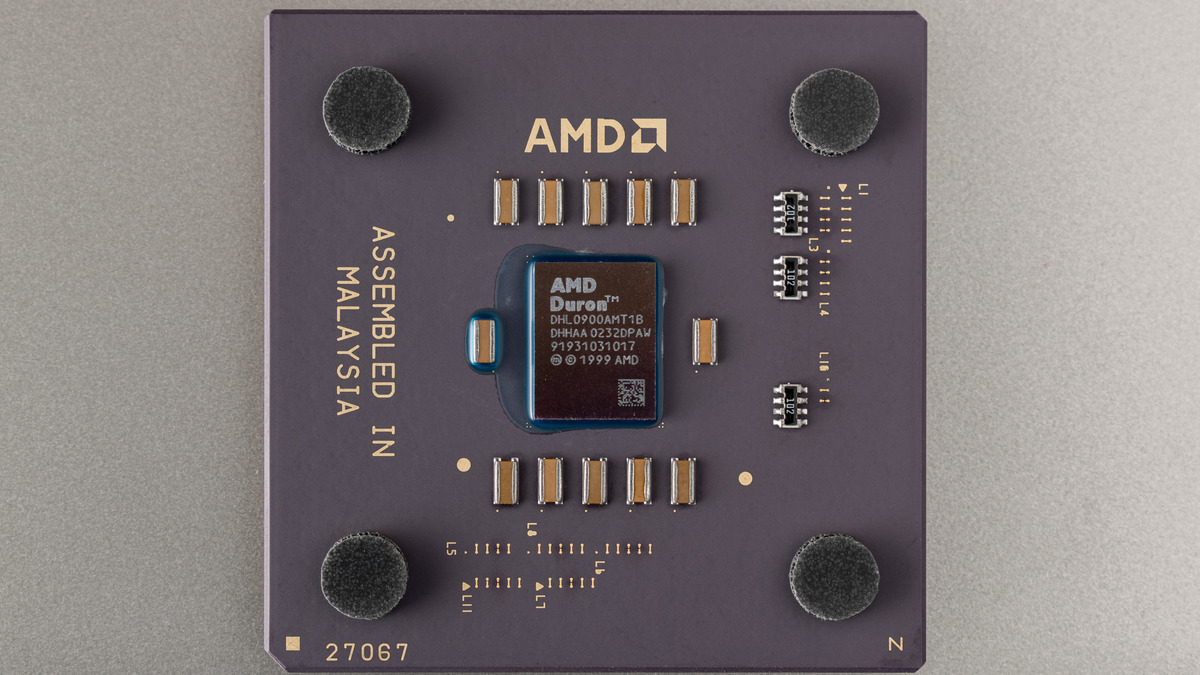
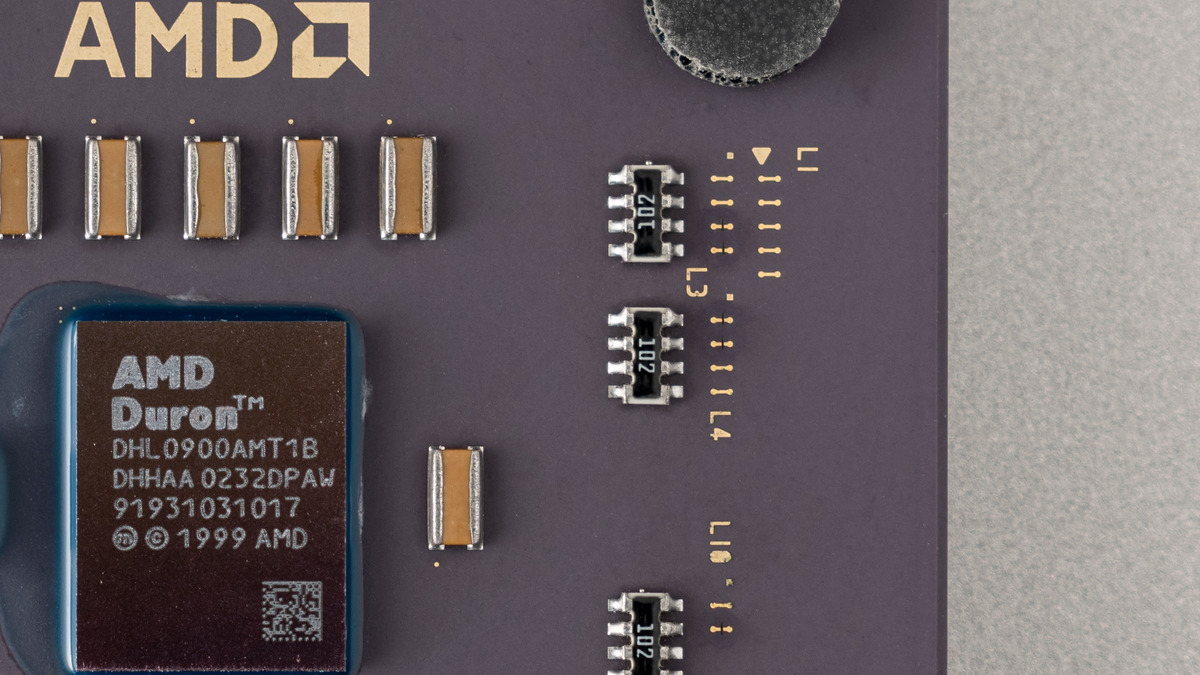
But the surprise is not the cartoon. It is that the trick is real. AMD launched the budget Duron line on June 19, 2000, on Socket A, also called Socket 462. Early Duron “Spitfire” chips, and the related Athlon “Thunderbird” chips, had tiny copper contacts on the package. The ones that mattered here were the L1 bridges.
AMD cut those L1 bridges with a laser to lock the clock multiplier. In other words, a Duron 600 ran at 6 times a 100 MHz bus. You could not just type 9x in the BIOS and call it a day. Overclockers soon figured out that pencil graphite conducts well enough to reconnect those cuts.
Tom’s Hardware wrote about the copper bridges in July 2000, after photos of a Duron 600 arrived. By August, Wesley’s Tool-Box was already using a pencil on a Duron 650. Overclockers.com later spelled out the same method, in March 2001. The basic idea never changed. Reconnect all four L1 bridges, and keep each one isolated from its neighbor.
Why a No. 2 Pencil Was Enough
A regular No. 2 or HB pencil leaves a thin trail of graphite. Graphite carries current. The laser cut was narrow, so a short, careful stroke could bridge each gap. If you smeared two bridges together, though, you could short the chip. Some guides said you could erase a mistake. Others warned that a bad short could kill the CPU. Period writers even disagreed about mechanical pencils. Overclockers.com disliked them, because some leads used plastic fillers. HEXUS, on the other hand, used a 0.3 mm HB mechanical pencil on a Duron 750.
Then you still needed a motherboard that let you change the multiplier, in BIOS or with jumpers. Boards like the Abit KT7 and the Asus A7V were favorites. HEXUS noted both in a September 2000 Duron guide. After that, you set a higher multiplier and, usually, a little more core voltage. More voltage meant more heat. So this was never “scribble and forget.” It was unlock, then overclock, then hope your heatsink was honest.
The 50% claim is fair as a clock-rate story, at least on the right chip. A Duron 600 running 6 x 100 MHz can, in principle, run 9 x 100 MHz, which is 900 MHz. That is a 50% jump in clock. Still, your games did not always get 50% faster. Benchmarks varied, and a Duron was not a secret Athlon. The cheap chip had only 64 KB of L2 cache, versus 256 KB on the Thunderbird Athlon. So the Short’s line about “fast chips and cheap slow chips that were almost the same inside” is close. It is not exact.
The Catch, and Why Modern Chips Will Not Play Along
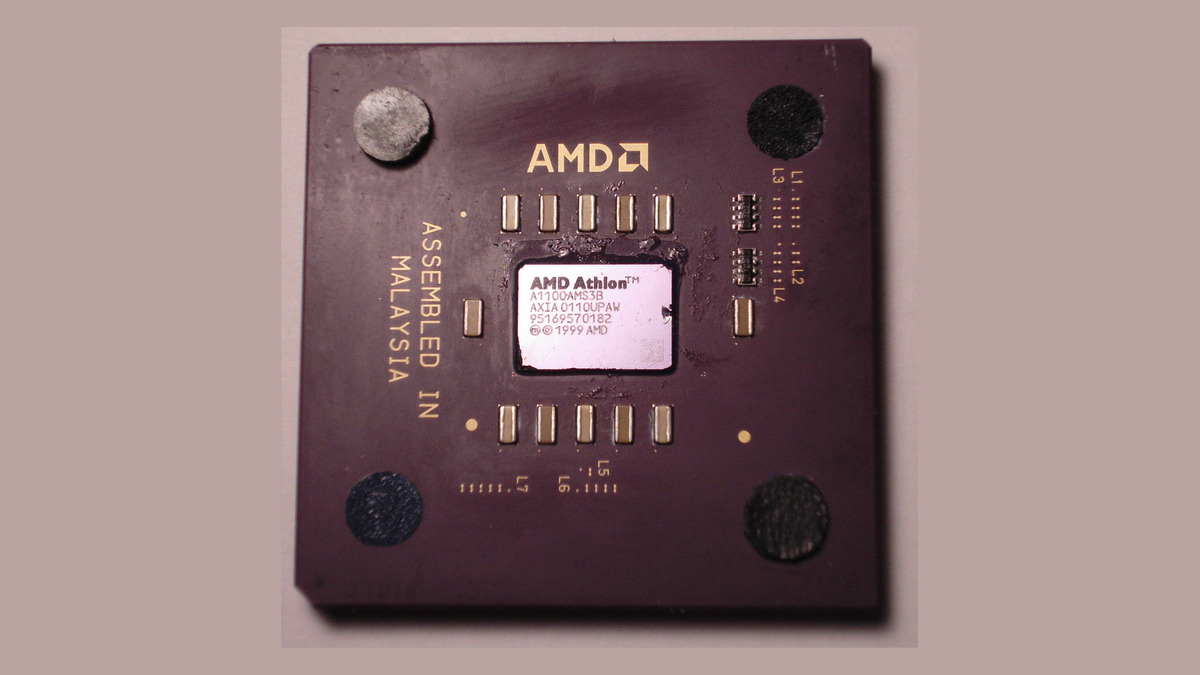
AMD even shipped some early chips with the L1 bridges already closed, so you did not always need the pencil. Later Socket A parts were meaner about the lock. Guides for Palomino and Thoroughbred cores said graphite often was not enough. That is because the laser cuts were deeper, like little pits. Instead, people switched to conductive paint, silver pens, or solder. Overclockers.com also noted that a pencil connection could wear out and need a redo.
And no, this does not work on a modern CPU. Today’s chips do not put a user-accessible multiplier lock on four gold dots at the edge of the package. If you pencil a current processor, the best case is a mess. The worst case is a short. Leave the No. 2 pencil for crossword puzzles.
For a Duron 600 on the right board, 900 MHz was a real target. It needed clean bridges and enough cooling, of course. It was not a cartoon. I would still not treat a 39-second Short as a how-to. The risk of shorting those tiny pads was real. The extra voltage and heat were real. And the 50% figure describes the clock, not every benchmark.
If the beige CRT in that animation makes you nostalgic, we have a match. We already walked through an office that looks like someone sealed the door in 1998.
Sources
The Short is Dart Games’ English clip “He scribbled on his CPU with a pencil… and it got 50% faster”. The video ID is QzKlveG_iZQ, and it runs 39 seconds. It went up on November 21, 2026. When ChartsList updated its counts on November 26, 2026, at 09:15 UTC, or 3:15 AM CT, it had 16,375,796 views. That was up 823,108 in 24 hours. It also sat at No. 62 on that site’s worldwide Shorts list. Quoted lines are from the Short’s captions.
For the history, see Wikipedia’s Duron entry for the June 19, 2000 launch. It also covers the Spitfire versus Thunderbird cache sizes. Thomas Pabst’s July 11, 2000 Tom’s Hardware feature covers the Socket A copper bridges. Frank Voelkel’s January 15, 2001 Tom’s Hardware note describes closing L1 contacts with a lead pencil. Wesley’s Tool-Box used a pencil on a Duron 650 on August 3, 2000. Overclockers.com’s L1 Bridge Connecting guide followed on March 29, 2001. The HEXUS Duron overclocking guide ran on September 7, 2000. Later Palomino and Thoroughbred cores often needed more than graphite, a point also made in period hardware-tuning guides.
The featured image is an AMD Duron 850 Spitfire in Socket 462, on an MSI K7T266 Pro2-UL board. That photo is by Trio3D, CC BY-SA 3.0, via Wikimedia Commons. We did not repeat it in the body. The Duron 900 MHz package and the L1 close-up are by Razor512, CC BY 2.0, via Wikimedia Commons. The Athlon 1.1 GHz Thunderbird is by Krdan, CC BY 3.0, via Wikimedia Commons. We cropped or fitted all four stills to 1200 x 675.
