
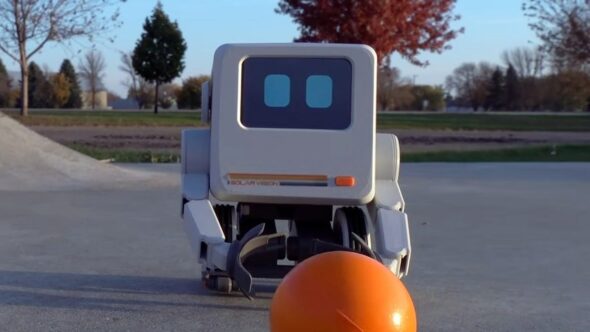
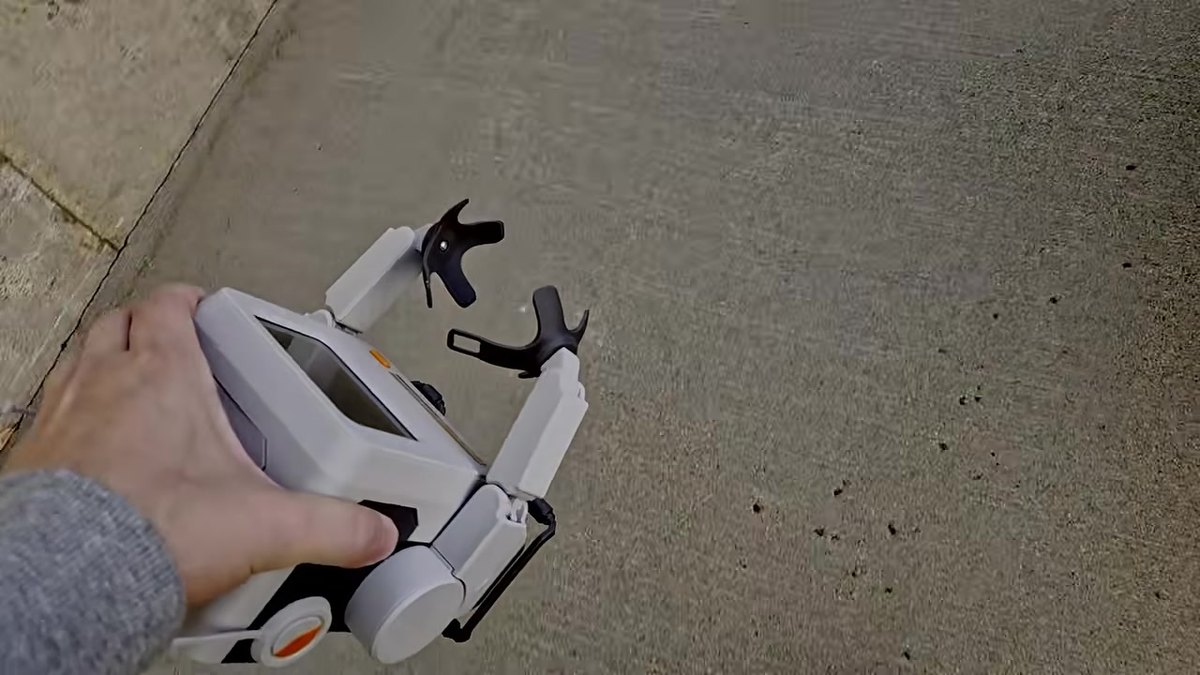
YouTube maker SECTOR 07 built a dog that is not a dog. FETCH is a 3D-printed, open-source robot that plays a full game of fetch on its own: it spots an orange ball, drives over, grabs it with two clawed arms, then looks for a raised human hand and brings the ball back. Parts run about $300. The brains are an Arduino UNO Q. Yahoo Tech, Hackster, and Arduino Project Hub all picked the build up this week.
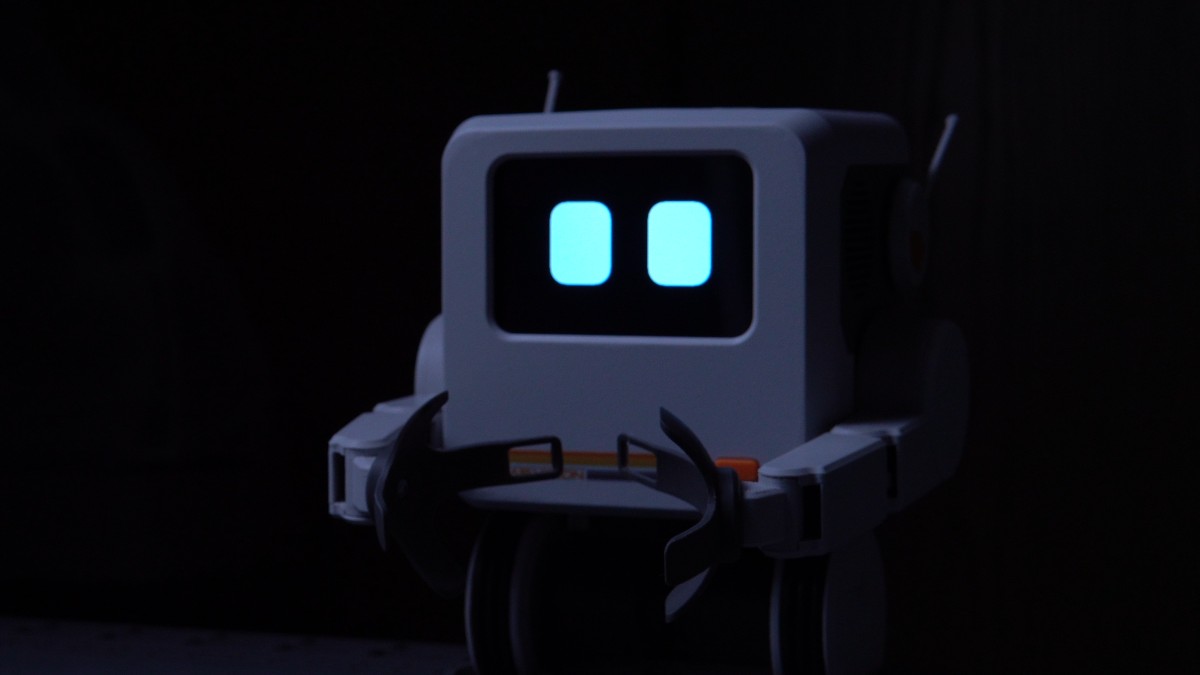
How the fetch loop actually works
FETCH is not remote-controlled theater. A USB camera under the body feeds a custom computer-vision model. Press coverage and the project notes say Sector 07 trained the detector in Edge Impulse on about 200 images each of an orange ball and a human hand, shot in mixed lighting and backgrounds. At runtime the model draws a bounding box; wheel commands steer toward the box, and arm reach is estimated from how big the box looks.
Early tests had classic robot comedy: circling forever, losing the ball when it got too close, gripping forever and refusing to let go. The fix mix was practical, not magical. Vision handles the approach, then the arms drop and the drivetrain rolls forward for a fixed scoop. Grip timing, motor speed, and detection thresholds got tuned until the find-grab-return loop stuck. Animated eyes on a front display, servo ears, and ElevenLabs voice clips sell the personality once the hard parts work.
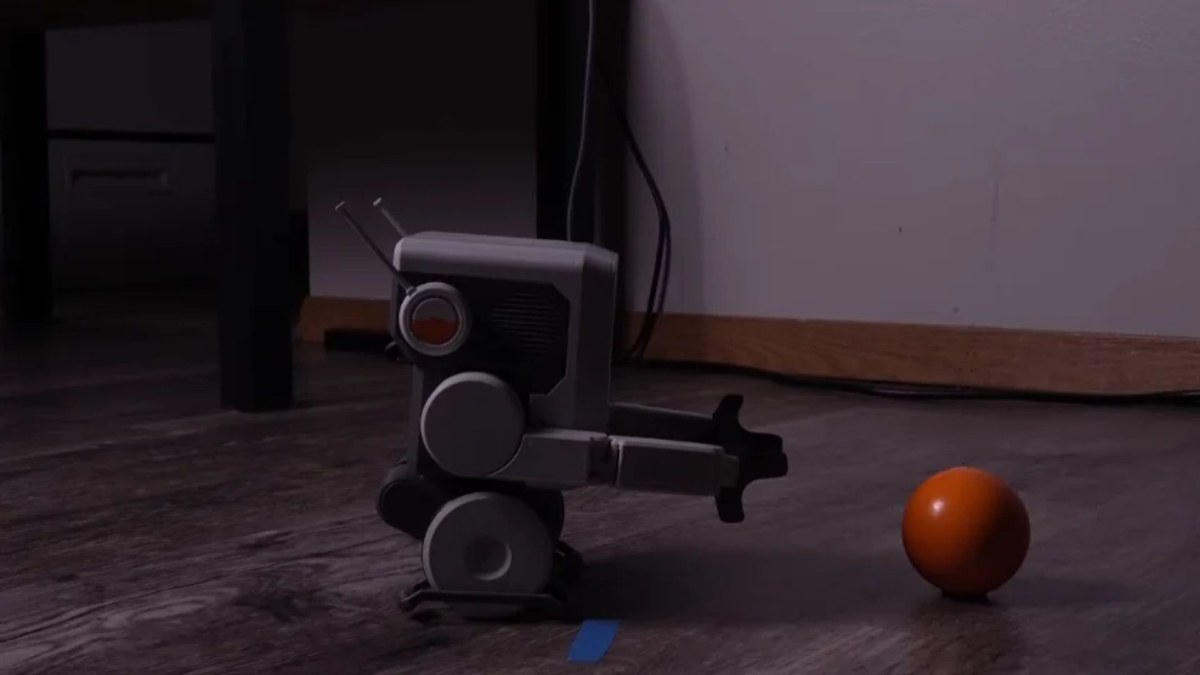
Arduino UNO Q plus a fold-flat body
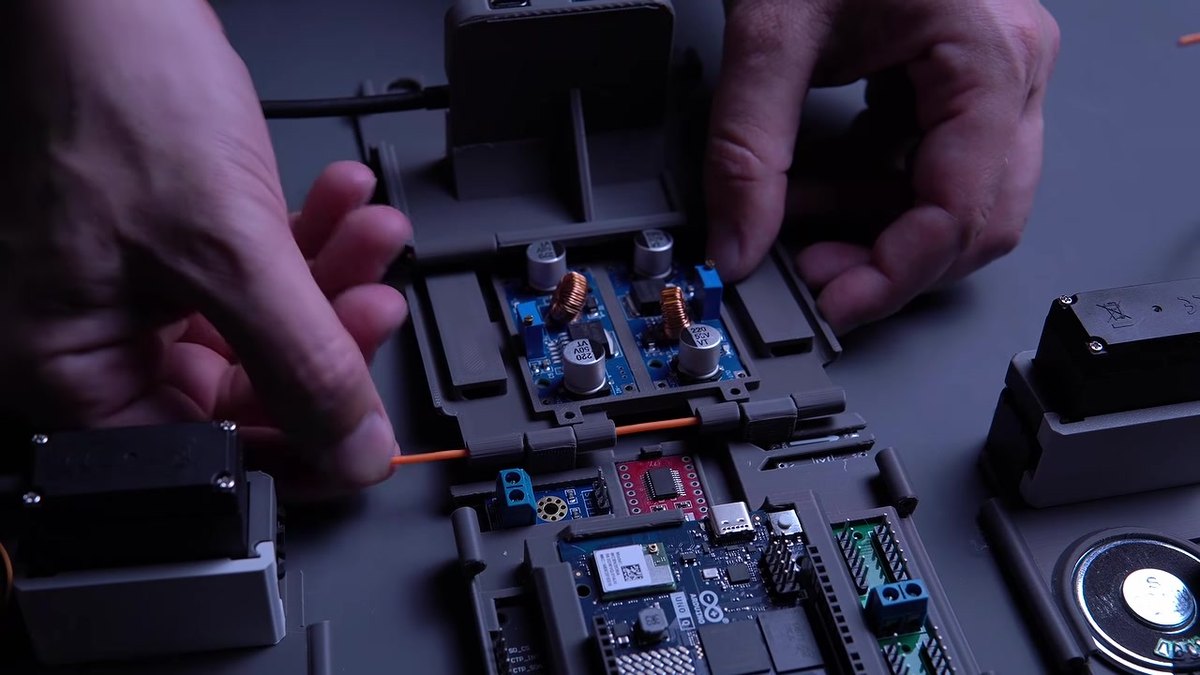
The controller is the Arduino UNO Q (4GB in the project BOM): a Linux-capable Qualcomm side for camera and Python vision, paired with an STM32 microcontroller for motors, servos, and other real-time chores. That split keeps heavy perception from starving the drivetrain. Hardware highlights from the Project Hub write-up include MG996R shoulder servos, MG90S ear/elbow servos, a TB6612FNG motor driver, TT drive motors, a 3.5-inch face display, DFPlayer Mini audio with dual speakers, dual XL4015 bucks, and a 2200 mAh pack.
The mechanical trick is the chassis. Instead of stuffing boards into a finished shell, Sector 07 printed hinged panels that lay flat for wiring, then fold into a cube. Filament pins act as hinge axles. Most of the outer shell, arms, and wheel hubs are consumer-printer parts that snap or slide together with only a handful of screws. Arduino sponsored the open release; the Hub package includes the assembly manual, BOM, schematic, printable files, and the FETCH App Lab application.
No shelf SKU, on purpose
There is nothing to add to cart for “the FETCH robot.” You print it, buy the BOM, and flash the software. That is the point. If you already live in filament and DuPont wires, this is a weekend-eating flex with a demo that makes non-makers stop scrolling. If you wanted a boxed robot dog for Christmas, keep browsing Unitree and friends. The official starting line is the Arduino Project Hub FETCH page plus the SECTOR 07 build video.
GadgetKing take
As a product, FETCH does not exist. As a maker project, it is the good kind of viral: a narrow behavior done end-to-end, open files, honest failure stories, and a robot cute enough that people forgive the wobble. Autonomous fetch is also a sly flex. Spotting a ball is easy mode; closing the loop through grasp, reorient, and hand delivery is where most hobby robots quietly die. Sector 07 got that loop on a ~$300 parts pile. For 3D-print folks, this is bookmark-and-build material. For everyone else, it is peak “I want one” followed by the sobering BOM.
Sources: Arduino Project Hub (Sector 07), Hackster, Yahoo Tech / Interesting Engineering, TechEBlog and SECTOR 07 on YouTube. Images: TechEBlog / IE stills (01, 03), Arduino Project Hub cover (02), SECTOR 07 video stills (04, 05).
More robots and 3D-printed mischief: ForgeCore’s 3D-printed landline phone jail, the $20,000 Voxel robot butler, robot dogs racing up Mount Tai and the Unitree H2-X kung fu bodyguard.
